
Exploring The Joys of Hibiscus 🌺 And A Special DIY Hibiscus Tea Recipe ☕👩🏾🍳
- Lovely Eve

- Oct 28, 2024
- 3 min read
Hello 👋🏾 If You Are New And Welcome Back If You Are Returning 🧡
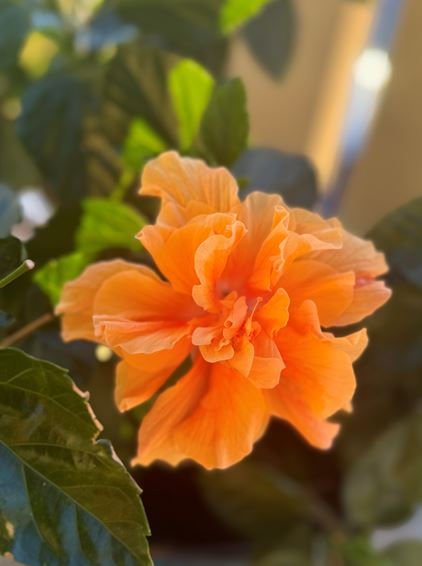
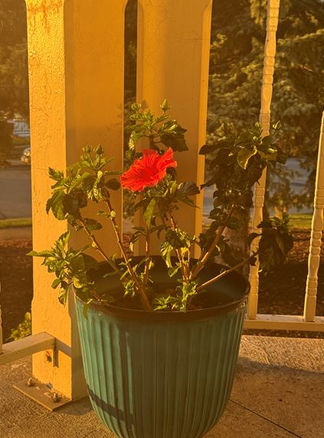
I'm really excited about today's blog post. I have been a fan of hibiscus tea for years and this summer I had the pleasure of growing my very own hibiscus out on my balcony. I had two different species I had the Hibiscus rosa-sinensis and the Hibiscus mutabilis. Both were absolutely stunning and taught me a lot in their own way, just watching the transformation of the plant/flower itself before it is ready to harvest. I'll be sharing some fun facts below about the plant as well as a DIY way to harvest and make your own Hibiscus Tea! ☕ All of the pictures shown in this blog are from my personal plant journey 🥰
Hibiscus × Rosa-Sinensis
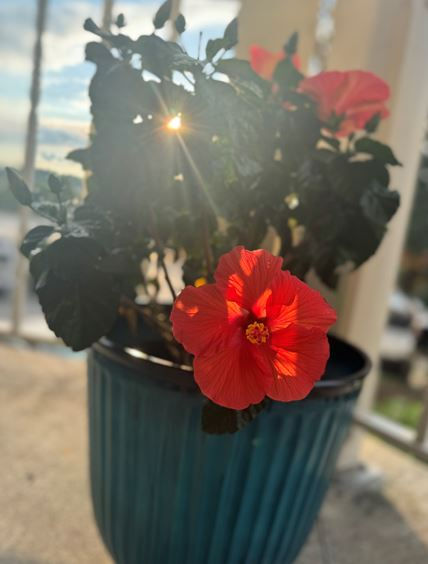
Hibiscus × rosa-sinensis, commonly known as Chinese hibiscus, China rose, Hawaiian hibiscus, rose mallow, and shoeblack plant, is a cultivated variety of tropical hibiscus, a flowering plant in the Hibisceae tribe of the Malvaceae family. This hybrid was developed by Polynesians in the western Pacific before European influence, combining the species Hibiscus cooperi and H. kaute. It is extensively grown as a decorative plant in tropical and subtropical regions.
Hibiscus Mutabilis
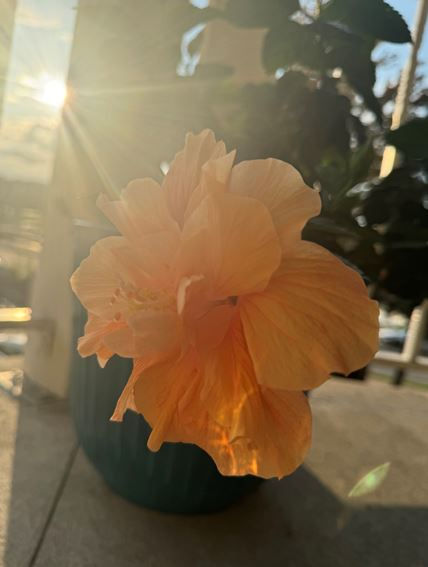
Native to China and Taiwan, the Confederate rose is a sizable shrub or small multi-stemmed tree belonging to the Malvaceae (mallow) family. It thrives in the coastal and piedmont areas of North Carolina, reaching heights of 10 to 12 feet and widths of 8 to 10 feet. When selecting a planting spot, take into account its space requirements. The genus name Hibiscus originates from the Latin word for mallow, while the species name mutabilis comes from Latin, meaning change, which describes the flowers' color transformation from white to light pink and finally dark pink as they mature.
Benefits of Hibiscus Tea
1. Provides protection through antioxidants
The hibiscus plant is packed with antioxidants like beta-carotene, vitamin C, and anthocyanin.
Antioxidants eliminate harmful molecules called free radicals in the body. These free radicals damage cells, leading to diseases such as cancer, heart disease, and diabetes. While the body uses its own antioxidants to combat free radical damage, foods rich in antioxidants may also help in disease prevention.
2. Combats inflammation
Hibiscus has shown potential in fighting inflammation, according to several animal studies and a few small human studies.
Inflammation is linked to the onset of various illnesses like cancer, asthma, Alzheimer's disease, heart disease, and rheumatoid arthritis. Although more research is required, it appears that hibiscus could offer beneficial anti-inflammatory effects.
3. Reduces blood pressure
High blood pressure affects almost half of all U.S. adults, leading to severe health issues such as heart attack, stroke, heart failure, and kidney disease. Clinical trials have demonstrated that drinking hibiscus tea can lower blood pressure in humans.
4. Lowers cholesterol levels
High cholesterol is a prevalent health concern among adults and contributes to severe conditions like heart attack and stroke. Some clinical studies have indicated that hibiscus lowers cholesterol levels.
5. Aids in weight management
Several studies have shown a positive impact on weight loss, potentially helping to prevent obesity — although these studies utilized hibiscus extract, a more concentrated form than hibiscus tea.
6. Combats bacterial infections
Laboratory studies have demonstrated that hibiscus extract can control certain types of bacteria. While the antibacterial properties of hibiscus are evident, researchers are investigating its effectiveness in humans.
7. Supports liver function
Several studies suggest that hibiscus promotes liver health. The extract shields the liver from various toxins, likely due to its potent antioxidant properties. It has even exhibited some anti-cancer properties in laboratory assessments on liver cells.
Calyxes

DIY Hibiscus Tea Recipe ☕
To harvest hibiscus for tea, you can:
1. Pick the calyxes
When the flowers are fully bloomed, you can harvest the calyxes, which are the bulb-like parts at the base of each flower. The calyxes are deep red and teardrop-shaped. You can use clippers to remove the calyxes to avoid damaging the branch.
2. Dry the calyxes
You can air-dry the calyxes for longer storage. Spread them out in a single layer on a paper towel or cotton cloth in a cool, dry place for 7–10 days. You can also use a dehydrator. Once they are dry, store them in an airtight container.
3. Make tea
To make tea, you can steep a few tablespoons of dried calyxes in boiling water. You can also use fresh flowers. Steep for 3–5 minutes, and the longer you steep it, the more flavorful the tea will be. You can add honey, sugar, or lemon to taste. You can drink hibiscus tea hot or cold, and you can add ice cubes to make iced tea.
🍸 You can also use hibiscus in cocktails by combining it with sugar, lemon, ginger syrup, and rum. 😉
Thank you once more for tuning in!
Eve🌻











sources:


Comments