
Coconut Oil - The Wonders of the Coconut Tree
- Lovely Eve

- Oct 31, 2020
- 5 min read

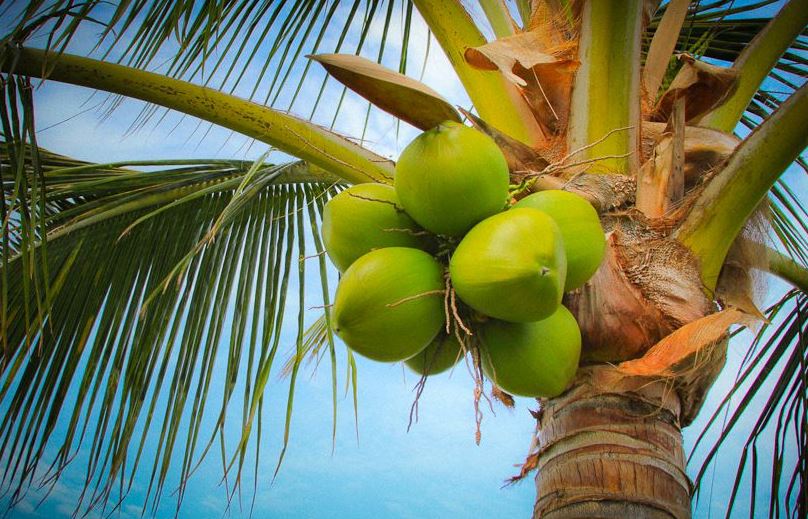
You might already know this, but the wonders of the coconut tree are why it's called the "tree of life." Everything from its roots to its leaves can be used for specific healthful purposes. It also offers much to nourish our body and our skin. It is abundant in micronutrients, lauric, caprylic and capric acids and has a very high amount of antioxidants. It's simply a great food that's good for your health and also helps you achieve beautiful skin. The wonders of the coconut tree are also because each of its parts is not just a part of a tree. Each can be made into either a very strong product or product for beauty and well-being.
The great thing you'll discover about coconut oil soaps is that when it's used for the skin, all the nutrients will provide nourishment. That will help you achieve beautiful and glowing skin. The surprising coconut oil soap benefits you should know can potentially change your life. Coconut oil soap is an excellent moisturizer for both the skin and the hair. The properties of the coconut oil also help remove dead skin cells and dirt away from the body. The oils also help prevent or reduce acne. It also helps firm up your skin helps you look younger as the soap is rich in antioxidants. Don't bother looking for soaps with lots of chemicals. You can have one made of pure natural ingredients.
Coconut oil is the most abundant source of lauric acid, a fatty acid known for its antimicrobial, moisturizing, and hormone-balancing properties. Aside from its anti-aging and skin-healing abilities, it also stimulates the production of collagen, and its vitamin E content protects the skin from sun damage.
When it comes to hair, using coconut oil helps maintain moisture and prevent protein loss from combing damage. That’s great news if you’ve been plagued by dry, itchy scalp, dandruff, hair loss and even frizz. All that fatty acids goodness also make it perfect for nourishing chapped lips, dry cuticles and brittle nails.
Coconut oil in the fight against cancer
Expectations and hopes for the coconut’s multi-faceted usage continue to grow. Naturopathic doctor and coconut expert Bruce Fife says the round, brown fruit has helped him make major advances in cancer research as well.
At his Coconut Research Center in the US state of Colorado, Fife is working on experiments with animals to find out how coconut oil can help guard against cancer. “The feed for all the animals with cancer was exactly the same — except for the oil added to it. We tried olive oil, sunflower oil, rapeseed oil, coconut oil and a few others. The cancer advanced in all the animals in the study except for the ones who were fed coconut oil,” said Fife.
The American Institute for Cancer Research (AICR) has warned against the hype surrounding coconut oil as a possible remedy to cancer. Thanks to its high selenium content, coconuts are rich in anti-oxidants, which slow the ageing process in human cells. But AICR reports that little can be said at this point on how effective coconuts really are in fighting cancer.
Still, coconut milk is an extremely healthy alternative as it contains high levels of potassium, vitamin c and magnesium. A bit of coconut water is far better than any sports drink, in fact. And because coconut water’s pH level is similar to human blood’s level and its salt content resembles that in human cells, it can even be used for infusions in emergencies.
Energy source and climate protection
On remote islands around the world, residents who do not have access to water sources often rely on coconut water instead to quench their thirst. Coconut palms grow along the tropical belt on the 26 degree latitude line, north and south. And in some 90 countries, more than 11 million farmers depend on coconuts for their livelihoods.
In the Philippines, coconut oil was until recently used solely for roasting and baking. Now, it’s used to produce vast quantities of biodiesel.
Romulo Arancon, executive director of the Asian and Pacific Coconut Community, says using coconuts to produce fuel cuts down on the high cost of importing fossil fuels. “Using coconut oil instead of diesel will make countries more and more independent. Now we’re trying to increase the coconut harvest without destroying the environment. It’s important that making biodiesel does not compete with food plants,” said Arancon.
The eco-friendly fuel is not only cheaper but also releases a minimal amount of CO2. Plus, coconut-based diesel oil is also said to smell much better than the traditional variety.
Embedded at the top of this page is a Deutsche Welle video (by Kerstin Schweizer) showcasing a project that is an example of using plant waste to protect the climate.
Nature provides us with the a variety of natural resources to spur innovation, and all right at our doorstep: sugar cane remnants are saved from the trash heap and turned into eco-friendly plastic, bamboo becomes an ideal building material because it re-grows faster than any tree, and coconut is a multi-purpose star, used for everything from medicine to green fuel. All it takes is a little imagination and inspiration. Across the world, people are protecting the environment by using resources in a smart and eco-friendly way.
In Cambodia, traditional coal is being replaced by eco-friendly briquettes made from coconut shells.
Project goal: Find and employ alternatives to charcoal
Project size: 15 employees, 8 tons of coconut shell coal every month
Project investment: 300,000 euros ($397,200)
CO2 reduction: 1,500 tons a year
The outer shell of the humble coconut has the power to save Cambodia’s forests. Wood remains the main energy source in the country as a result of which the country’s virgin forestland is rapidly disappearing. In the last 40 years, forest cover has shrunk from 70 percent to just 3 percent. Coconut shells can be used as a material to produce briquettes, and no trees have to be felled to access them, either. In addition, they’re cheap and burn longer than wood.
Coconut shell briquettes are still in the early phase of development, and the product remains largely unknown. That’s why students are driving through the streets of the capital, Phnom Penh, in rickshaws to get out the word. They introduce the coconut shell briquettes to homes and businesses, like restaurants. And the interest in their product is high — the use of briquettes has quintupled since they started.
Everything is put to use
And it’s not only the inside of the fruit that’s useful. Almost every part of the coconut palm finds use in. The stems and leaves can be turned into building materials for constructing homes, ships and furniture. The hard shell is a valuable material in creating fuel, and the fruit’s husk and fibres serve as a useful insulation material in eco-friendly houses.
Even the waste left behind after a coconut harvest has great potential: one German company called “Coir Project” turned the remnants into a coco substrate, where fruits and vegetables can grow without needing soil.
Until now, creating soil-less fruit and veggie plantations required using mineral wool or glass fibre mats. But Coir Project’s head Carsten Klinge says producing mineral wool consumes large amounts of energy and it’s difficult to dispose of the leftover substrate. Coco substrate, on the other hand, is the perfect green alternative.
“In Sri Lanka, coconut palms were mainly used for producing coconut milk and pulp. But when you process the fruit and the shell further into substrate, you complete the circle,” said Klinge.
The coconut palm has been an important source of nourishment and a vital building material for more than 3,000 years. And it appears the amazing plant will be just as important in the future.
There’s only one downside between the usually harmonious relationship between man and coconut: according to a study by the University of Florida, around 150 people die every year after being hit by falling coconuts. That’s 15 times as many deaths as by shark attacks.
Sources:


Comments